logo
Latest News
  • The Invisible Killer of Static Electricity: Why Do Protective Clothing Need to Pass EN 1149 Testing?
    03-27 2026
    The Invisible Killer of Static Electricity: Why Do Protective Clothing Need to Pass EN 1149 Testing?   In industries such as petrochemicals, natural gas, pharmaceuticals, and food processing, static discharge is one of the main ignition sources for fire and explosion accidents. The accumulation of static electricity generated by human activities, if there is no effective discharge path, may release energy in an instant that is sufficient to ignite flammable gases or dust. As the last line of defense for safety, the static performance of anti-static protective clothing must be rigorously verified.   Today, we will explain in a simple and clear manner the two core standards for anti-static testing of protective clothing materials: EN 1149-1 and EN 1149-2. Understanding these standards will not only help you choose the right products, but also ensure the safety threshold is not breached.   1. Where do static charges come from and why should we prevent them? When we are moving around in ordinary synthetic clothing (such as walking or rubbing), our bodies are prone to generating high-voltage static electricity. In environments where flammable and explosive substances are present, this instantaneous discharge of static electricity could become a source of ignition; in the electronics industry, it could cause delicate components to break down and be damaged.   The fundamental goal of static electricity protection is not to "eliminate the generation of static electricity" - this is impossible to achieve in actual operations. Instead, it is to provide a complete and controllable "discharge system" for the generated static charges: to guide the charges through the clothing to the ground, thereby avoiding the accumulation of charges.   A complete anti-static grounding system consists of four components: l Human body: Movement generates static charges l Protective clothing: Receives and conducts the charges generated by friction between the human body and itself l Anti-static shoes: Transfers the charges from the feet to the ground l Ground: Must be conductive or have the property of dissipating static electricity   The EN 1149 standard system (protective clothing electrostatic performance) is specifically designed to evaluate the performance of protective clothing within this system. Among them, EN 1149-5 is the final specification for material performance and design requirements, and the materials must pass the tests of EN 1149-1, EN 1149-2 or EN 1149-3 before they can meet the compliance requirements of EN 1149-5.   Decoding the EN 1149 standard system EN 1149 is an EU standard for the testing of electrostatic properties of protective clothing. Among them, EN 1149-5 is the final performance requirement, and to meet this requirement, the fabric must first pass the tests of EN 1149-1 or EN 1149-2. If the anti-static suit is compared to a "water-conducting pipeline": l EN 1149-1 measures "whether the inner wall of the pipeline is smooth and unobstructed" (transverse conductive static electricity). l EN 1149-2 measures "whether the pipe wall is water-permeable" (longitudinal conductive static electricity). · 1. EN 1149-1: Surface resistance test (transverse conductivity) Test principle: This test mainly examines the conductive ability of the "surface" of the fabric. The standard testing method is to place the fabric sample on an insulating platform in a specified temperature and humidity environment, and use two concentric circular electrodes or parallel electrodes to contact the fabric, applying a certain direct current voltage, and measuring the resistance of the fabric surface. Judgment requirements: According to the standard requirements, the material must conduct charges through a structured conductive fiber mesh (such as metal fibers, carbon fiber blended mesh, usually requiring the mesh to be no larger than 10mm x 10mm). The surface resistivity must be ≤ 2.5 × 10⁹ Ω (ohms). In simple terms: The lower this value is, the faster the electric charge "runs" on the fabric surface, and it is less likely to accumulate at a certain point.   2. EN 1149-2: Vertical Resistance Test (Longitudinal Conductivity) Test Principle: If the surface resistance measures "horizontal conductivity", then the vertical resistance measures "transverse conductivity". This test method specifies how to measure the resistance through the thickness of the material (that is, the resistance from the outside of the garment penetrating to the inside). Why measure this? Because anti-static clothing usually requires grounding. Charges not only need to be conducted away from the surface of the garment, but also need to be conducted to the human body through the parts where the garment contacts the skin (such as cuffs, collars, or specially designed grounding connection points), and then discharged to the ground through anti-static shoes. If the vertical resistance is too high, the surface charges "won't go down", and there is still a risk. Criteria for determination: EN 1149-2 specifies the specific test procedures, but it is worth noting that the overall protective system requires that the resistance between the wearer and the ground usually needs to be less than 10⁸ Ω. This requires the clothing and anti-static shoes to be coordinated to achieve this.   Three Essentialities of Conducting This Test for Protective Clothing 1. The "fuse" for life safety In industries such as petroleum, chemical engineering, and mining, the working environment is filled with flammable gases or dust. According to the ATEX explosion-proof directive, enterprises operating in these high-risk areas must use protective clothing that complies with the EN 1149 standard. Ordinary work clothes that do not prevent static electricity are like walking in a gunpowder depot with spiked shoes, which is extremely dangerous. The EN 1149 test ensures that the fabric will not generate ignitable discharges during friction or peeling.   2. The "Test Standard" for Product Quality As a manufacturer or purchaser, how can you prove that your clothes are truly anti-static? By passing the tests of EN 1149-1 and EN 1149-2, you can obtain authoritative data. Testing can not only verify whether the distribution of conductive fibers is uniform, but also examine the performance retention rate of fabrics after washing, wear and tear or changes in humidity. For instance, some fabrics are qualified when they first leave the factory, but they become ineffective after a few washes due to the peeling off of the conductive coating. However, a strict testing process (including washing pre-treatment) can screen out truly durable products.   3. The "Passport" for Industry Entry For those who wish to enter the European market or supply protective clothing to multinational enterprises, EN 1149 is a hard requirement. Electronic industry: To prevent ESD (electrostatic discharge) from damaging microcircuits, point-to-point resistances are typically required to be between 10⁵ and 10¹¹ Ω. Multi-standard composite: Anti-static clothing often needs to be combined with flame retardant standards (such as EN ISO 11612), and must meet the basic ergonomic requirements of EN 340. Only after passing the tests of EN 1149-1 or EN 1149-2 can the overall certification of EN 1149-5 be obtained.   Dongguan Skyline Instruments Facilitate Precise Testing Having understood the principles and requirements of the standards, the next step is how to implement them accurately. At Dongguan Skyline Instruments, we are well aware that behind every resistance value lies a heavy responsibility for safety. Whether it is the surface resistance test required by EN 1149-1 or the vertical resistance test as per EN 1149-2, they all require the use of high-precision testing equipment and a standardized testing environment. Our professional testing instruments can help quality inspection units and manufacturing enterprises precisely control the fabric quality, ensuring that each batch of protective clothing meets the standard requirements, truly building a reliable anti-static barrier for frontline workers.       Safety is no small matter. Static electricity must be strictly prevented. If you still have questions about the static electricity testing standards for protective clothing or want to know the latest testing instrument solutions, please feel free to contact Dongguan Skyline Instruments at any time. Let's use precise data to safeguard the safety of every assignment.
  • Oil prices bottom out in 2026, with petroleum testing instruments becoming a
    03-27 2026
    When a massive oversupply of 2.3 million barrels per day hits the market, precise monitoring becomes the lifeline for oil companies to navigate through economic cycles. Goldman Sachs' latest macro commodity research report recently highlighted a pivotal market turning point: The global crude oil market is undergoing a critical restructuring phase. Brent crude oil is projected to hit a low of $60 per barrel in the fourth quarter of 2026, while WTI crude oil is expected to decline to $56 per barrel. This round of price revaluation is driven by the decline in geopolitical risk premiums and the decrease in fair value caused by increased OECD commercial inventories. For enterprises in the petroleum industry chain, this presents both challenges and opportunities. Against the backdrop of low oil prices and shrinking profit margins, precision and efficient petroleum detection instruments have evolved from being mere "supporting roles" in laboratories to becoming critical tools for enterprises to reduce costs, enhance efficiency, and mitigate risks. Market Insight: The Turning Point from Surplus to Shortage. Goldman Sachs quantitative data reveals that the global oil market will experience a steep supply-demand curve: By 2026, the global crude oil market will face a massive surplus of up to 2.3 million barrels per day, with the first quarter alone seeing an astonishing surplus of 2.9 million barrels per day. However, the market landscape is expected to undergo a turning point in 2027. Data indicates that the market will return to a deficit era in the second half of 2027, with a projected supply gap of 300,000 barrels per day in the fourth quarter. This shift will be driven by further growth in global demand, reaching 106.6 million barrels per day. Price trend forecast: Although oil prices face downward pressure in 2026, Goldman Sachs warns that future price risks are bidirectional and generally tend to rise. Investors should closely hedge against the risk of a sharp rebound in 2027 due to structural shortages while shorting the 2026 cycle. European and American Oil Markets: Growth Opportunities in a Maturing Landscape. On the demand side, the global oil market exhibits significant regional structural disparities. OECD countries are projected to see stagnant demand over the next three years, remaining stable within the range of 45.9 to 46.2 million barrels per day. The growth in global demand will be entirely dependent on non-OECD countries, with expectations rising from 58.4 million barrels per day in 2025 to 60.5 million barrels per day by 2027. Despite sluggish demand growth in OECD countries, the European and American markets have demonstrated robust vitality in the field of oil testing instruments. According to a QYResearch report, Europe and North America account for 22% and 28% of the global oil industry testing instrument market share, respectively. The North American market continues to experience sustained demand growth, fueled by a well-established predictive maintenance culture and widespread adoption of digital monitoring systems. The United States maintains a leading position in the oil detection instrumentation sector, supported by its extensive installed base of rotating equipment and advanced industrial automation ecosystems. Shale operations, refinery upgrades, and the implementation of data-driven maintenance strategies have significantly boosted market demand for online sensors and real-time analysis systems. The European market demonstrates robust adoption rates, supported by stringent regulatory frameworks, a strong industrial base, and modern energy infrastructure. Manufacturers in Germany, the UK, France, and Italy actively implement oil monitoring technologies to enhance sustainability, reduce lubricant waste, and comply with EU mechanical directives. Trends such as fleet electrification, offshore wind power development, and smart factory initiatives further drive market growth. Petroleum Testing Instruments: From Auxiliary Tools to Strategic Assets During periods of low oil prices, petroleum testing instruments have evolved from mere laboratory equipment to strategic assets for enterprises. They are capable of predicting potential issues before equipment failures occur, preventing unexpected shutdowns, and helping companies avoid substantial losses. Meanwhile, with increasingly stringent environmental regulations, accurate detection of oil composition and pollutant content has become a prerequisite for compliant operations in enterprises. Through real-time oil analysis, companies can optimize lubricant replacement intervals, reduce lubricant waste, extend equipment service life, and consequently lower operational costs. In European and American markets, automated and intelligent inspection solutions are gaining popularity due to high labor costs. On-site sampling technology continues to gain momentum, with portable testing equipment and online sensors enabling technicians to directly assess lubricant viscosity, particle count, moisture content, and dielectric strength at equipment locations. This approach is particularly favored in industries requiring rapid decision-making, such as mining, shipbuilding, power plants, and heavy manufacturing sectors. The future oil market will belong to enterprises that can accurately capture the value of every drop of oil, which is underpinned by advanced detection instruments. In a volatile market, only precise data and scientific decision-making can guide companies through economic cycles and prepare them for the supply gap and price rebound in 2027. DONGGUAN SKYLINE NEW TECHNOLOGY CO.,LTD., covering multiple fields such as viscosity analysis, flash point testing, moisture determination, and the full range of lubricants, have steadily begun to enter the international market. We welcome inquiries and collaborations from readers to jointly promote the precision and intelligent development of the petroleum Welcome to your inquiry!
  • IP Protection Grade Decryption: Why Does Your Device Need This
    02-02 2026
    IP Protection Grade Decryption: Why Does Your Device Need This "Shield"? In modern life, electronic devices have become an indispensable part of our daily routines. However, in harsh environmental conditions, factors such as dust, water, and oil stains may cause damage to the devices, affecting their lifespan and performance. To address these challenges, the International Electrotechnical Commission (IEC) has established the IP protection grade standard to assess the protective capabilities of electrical equipment against foreign objects and liquid intrusion.   What is IP protection grade? "IP (Ingress Protection) protection grade" is a standard for equipment dust and water resistance set by the International Electrotechnical Commission. It consists of two numbers: The first number: Dust protection grade (0-6) From 0 (no protection) to 6 (fully dust-proof), the higher the number, the stronger the protection The second number: Water resistance grade (0-9) From 0 (no protection) to 9 (resistant to high-temperature and high-pressure water jets), covering all kinds of water environments             Dust protection level:   0: No dust protection IP1X: Prevents entry of solid foreign objects with a diameter greater than 50mm IP2X: Prevents entry of solid foreign objects with a diameter greater than 12.5mm IP3X: Prevents entry of solid foreign objects with a diameter greater than 2.5mm IP4X: Prevents entry of solid foreign objects with a diameter greater than 1mm IP5X: Prevents dust entry IP6X: Completely dust-proof   Waterproof rating:     0: No waterproof protection IPX1: Prevents vertical dripping water IPX2: Prevents dripping water within an inclination of 15° IPX3: Prevents sprayed water IPX4: Prevents splashed water IPX5: Prevents low-pressure water column (within 3 minutes, 12.5cm away from the nozzle, using a φ12.5mm water column sprayed at a 30° angle) IPX6: Prevents powerful sprayed water IPX7: Prevents brief immersion (depth not exceeding 1m, time not exceeding 30 minutes) IPX8: Prevents long-term immersion (depth exceeding 1m) IPX9K: Prevents high-temperature and high-pressure water column (10cm away from the nozzle, using 80°C hot water sprayed at a flow rate of 17.5L/min for 15 minutes)       Why is the IP rating so crucial for inspection equipment? 1. Ensuring measurement accuracy Dust and moisture intrusion can affect the sensor's accuracy, leading to measurement data deviations. In precise inspections, a micrometer-level error can mean the difference between a product being qualified or not. 2. Extending equipment lifespan Good protection can reduce the corrosion and wear of internal components, significantly increasing the equipment's lifespan and reducing maintenance costs. 3. Expanding application scenarios Equipment with a high protection rating can operate stably in more demanding environments, opening up a broader market space for you.   Actual demands for IP ratings in various fields l Electronic manufacturing workshops (recommended IP54 and above) Demand: Protection against fine dust (such as tin slag, plastic particles), protection against splashing liquids Application: PCB inspection, component testing, SMT production line monitoring l Outdoor testing scenarios (recommended IP65 and above) Demand: Complete dust protection, protection against rain erosion Application: Building quality inspection, bridge monitoring, environmental monitoring stations l Food and pharmaceutical industry (recommended IP66/IP67) Demand: Protection against high-pressure rinsing, protection against disinfectant corrosion Application: Packaging integrity inspection, cleanroom measurement l Automotive manufacturing (recommended IP67/IP68) Demand: Protection against oil mist, protection against high-pressure cleaning Application: Engine component inspection, painting workshop measurement l Extreme industrial environments (recommended IP68/IP69K) Demand: Protection against continuous immersion, protection against high-temperature and high-pressure cleaning Application: Petrochemicals, mining machinery, shipbuilding   Selection misunderstandings and practical suggestions Misunderstanding 1: The higher the protection level, the better In fact, excessively high protection levels will increase equipment costs and size. The appropriate level should be selected based on the actual usage environment. Misunderstanding 2: Only look at the IP number The same IP level may vary in different brand devices. Attention should be paid to specific test reports and actual usage cases. Practical suggestions: Evaluate the dust concentration, liquid contact type and frequency of the equipment usage environment Consider possible future expansion of application scenarios Pay attention to the quality of sealing materials and interface design details of the equipment   The IP protection solutions of Skye Industry At Skye Industry in Dongguan, we provide customized protection solutions according to the needs of different industries: Basic industrial version: IP54 standard configuration, meeting the needs of most indoor industrial environments Outdoor enhanced version: IP65/IP66 protection, equipped with UV-resistant shell and wide temperature range design Special protection version: IP67/IP68 grades, suitable for extreme conditions and special industry needs Each of our devices undergoes strict protection tests before leaving the factory to ensure that the nominal level is consistent with the actual performance.  
  • How to evaluate the corrosion resistance of lubricating grease?
    01-02 2026
    How to evaluate the corrosion resistance of lubricating grease? A comprehensive guide to lubricating grease corrosion resistance testing and professional testing equipment. A tiny corrosion spot in a bearing can cause millions of dollars worth of equipment to shut down. Seemingly simple grease testing safeguards the reliability of the industrial world. Grease corrosion resistance testing is a crucial step in ensuring the long-term reliable operation of machinery. According to ASTM D1743, this test precisely evaluates the corrosion resistance of grease-lubricated tapered roller bearings in a simulated humid environment. This method not only differentiates the relative corrosion resistance of different greases but has also proven a strong correlation between laboratory results and grease performance in real-world applications. 01. Significance of the Test Lubricating grease plays a dual role in mechanical systems: it is both a protector against friction and a potential equipment killer due to insufficient corrosion protection. Studies show that up to 75% of bearing failures are directly related to improper lubrication. In industrial applications, corrosion can lead to reduced equipment efficiency, shortened lifespan, and even catastrophic failures. The ASTM D1743 test, by simulating harsh, humid working environments, predicts the corrosion protection performance of lubricating grease in real-world applications. This test method, based on CRC technology L 412, has demonstrated a reliable correlation between laboratory results and the field performance of aircraft wheel bearing lubricating grease. The test results directly affect the safe operation and maintenance costs of mechanical equipment, and are particularly valuable in fields with extremely high reliability requirements, such as aerospace, automotive manufacturing, and heavy industry. Based on ASTM D1743, China has also formulated a corresponding national standard, GB/T5018-2008. Both standards share essentially the same test principles and conditions, providing a unified technical basis for the performance evaluation of lubricating grease products both domestically and internationally. 02 Analysis of Mainstream Testing Instruments There are various testing instruments on the market that conform to the ASTM D1743 standard, each with its own characteristics. For ease of comparison, the core information of our representative product is presented below in a clear format: Dongguan Skyline Industrial Co., Ltd. Model: SL-OA108 • Origin and Brand: SKYLINE • Key Features: Beautiful and elegant design, reasonable structure, easy operation, and accurate measurement results • Technical Parameters: Motor speed 1450r/min±50r/min, power 60W, operating power AC 220V±10% The core design of this equipment strictly adheres to the requirements of the ASTM D1743 standard, ensuring the reliability and comparability of test results. 03 Detailed Test Procedure The ASTM D1743 corrosion test is a systematic process, mainly consisting of four stages: The sample preparation stage requires uniformly applying grease to the clean surface of the tapered roller bearing. A dedicated grease applicator is typically used to ensure a uniform coating. This step is crucial for the accuracy of the final results. During the bearing operation stage, the grease-coated bearing is operated under a slight thrust load for 60 seconds ± 3 seconds, simulating the distribution of grease in actual use. The environmental exposure stage is the core of the test. The bearing is placed in an environment of 52℃ ± 1℃ and 100% relative humidity for 48 hours ± 0.5 hours, simulating high humidity operating conditions. In the results evaluation stage, technicians clean the bearing and carefully inspect the raceway corrosion. The evaluation criteria are very clear: the presence of corrosion spots of 1 mm or larger on the outer raceway of the bearing indicates failure, meaning the grease's anti-corrosion performance has not met the requirements. 04 Other Key Grease Testing Equipment Besides corrosion resistance testing, a complete grease performance evaluation includes several aspects, requiring different specialized equipment: A grease oil separation analyzer is used to assess the stability of grease. Grease releases base oil during storage and use, a characteristic that directly affects its service life and lubrication performance. A grease water spray characteristic tester simulates the grease's ability to retain moisture under water erosion conditions. This performance indicator is particularly important for machinery frequently exposed to water or humid environments. An automatic copper wire corrosion tester specifically assesses the grease's corrosiveness to non-ferrous metals. Many pieces of machinery contain copper alloy components, and grease should not accelerate the corrosion process of these components. In addition, there are various devices specifically designed to test grease's oxidation resistance, mechanical stability, and low-temperature performance. These tests together constitute a comprehensive grease performance evaluation system, providing a scientific basis for selecting the appropriate grease for different applications. In the hidden corners of the mechanical world, these tests silently safeguard the operational safety of everything from precision instruments to heavy equipment. The next time you hear the roar of airplanes taking off and landing or the hum of factory machinery, you'll know that lubricating grease corrosion testing equipment has played a part in it. If you need further information on technologies and instruments for testing the combustion performance of building materials, please contact Dongguan Skyline Team!
  • The Hong Kong fire rings the alarm: How can laboratories build a safety defense line for building materials tests
    12-25 2025
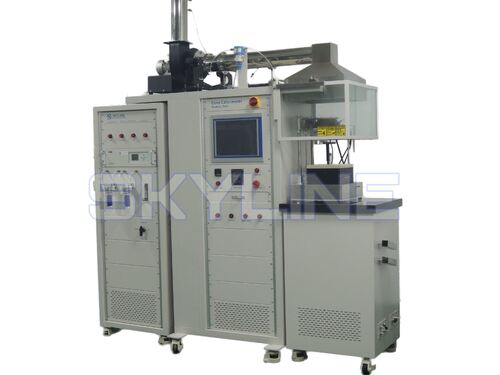
    The Hong Kong fire once again rings the alarm: How can laboratories build a safety defense line for building materials through combustion tests?   The recent serious fire accident in Hong Kong has shaken the entire society. This disaster not only caused significant property losses, but also made us deeply reflect: Have we achieved absolute safety in the field of building safety? As a supplier of laboratory equipment, Sky Industrial believes that scientific and rigorous building material combustion tests are the first line of defense to prevent such tragedies.   The Harsh Reality of Building Fires and Scientific Responses According to statistics, approximately 70% of deaths in building fires are caused by toxic smoke and gases produced by the burning of building materials, rather than the flames themselves. This data highlights the significance of testing the combustion characteristics of materials. Modern building material combustion tests not only focus on the flammability of materials but also emphasize the assessment of key parameters such as combustion rate, heat release, smoke density, and toxicity.   International mainstream combustion testing standards system (1) American and North American standards system • UL 94: Flammability test standard for plastic materials UL 94 V-0/V-1/V-2: Vertical burning test UL 94 HB: Horizontal burning test UL 94-5V: 5V grade vertical burning test • ASTM D3801: Vertical burning characteristics test for solid plastics • ASTM D635: Burning rate test for plastics in horizontal position • NFPA 285: Fire characteristics test for exterior wall assemblies • FM 4880: Fire resistance rating test for roof coverings • ASTM E84: Surface burning characteristics test, measuring flame spread and smoke production index • ASTM E662: Smoke density test, evaluating the degree of visual obstruction caused by material combustion • ASTM E1354: Cone calorimeter test, measuring key parameters such as heat release rate and ignition time   (II) European and International Standards System - EN 13501-1: Classification of the Fire Performance of Construction Products   A1, A2: Non-combustible materials   B, C, D: Classification of combustible materials   E, F: Highly flammable materials - EN 13823: Single Burning Item (SBI) Test for Construction Products - EN ISO 11925-2: Test for Burning Behaviour of Building Materials (Small Scale Burning Behaviour) - EN 4102: Fire Retardant Test Standard for Aerospace Materials - ISO 5660-1: Test for Fire Performance by Cone Calorimeter - ISO 9705: Room Fire Tests for Fire Protection Products, simulating real fire scenarios   (III) Chinese National Standard System (Extended) - GB/T 5454: Textiles - Determination of burning behaviour - Oxygen index method - GB/T 5455: Textiles - Burning behaviour - Vertical test - GB/T 8333: Test methods for burning behaviour of rigid cellular plastics - GB 20286: Fire performance requirements for flame-retardant products and components in public places - GB/T 16172: Test method for heat release rate of building materials - GB/T 2406.2: Plastics - Determination of burning behaviour by oxygen index - Part 2: Test at elevated temperature - GB 8624: Classification for fire performance of building materials and products - GB/T 20284: Single-chamber fire test for building materials and products - GB/T 20285: Classification of the fire hazard of smoke from materials   (4) Special Application Field Standards - IMO FTP Code: International Maritime Organization Fire Test Procedures Part 5: Flammability Test of Surface Materials Part 8: Fire Test of Soft Furniture - FAA 14 CFR Part 25: Aviation Materials Combustion Test Standards - NFPA 701: Flame Propagation Test of Textiles and Films   SKYLINE recommended professional combustion testing solutions (1) Basic screening-level testing equipment l Vertical/Horizontal Flammability Tester Applicable standards: UL 94, ASTM D3801, GB/T 2408 Functional features: Equipped with a precise flame height adjustment system and an automatic timing device, capable of testing parameters such as self-extinguishing time of the sample and ignition of dripping substances.     l Limiting Oxygen Index Tester Applicable standards: ASTM D2863, ISO 4589, GB/T 2406.2 Functional features: Equipped with a mass flow controller, oxygen concentration control accuracy ±0.1%, automatic oxygen concentration adjustment function Accurately determines the minimum oxygen concentration required for a material to sustain combustion in a nitrogen-oxygen mixed gas. This parameter is an important indicator for evaluating the relative flammability of materials, and is particularly suitable for assessing the flame retardancy of polymer materials.     l Building materials flammability tester Applicable standards: EN ISO 11925-2, GB/T 8626 Functional features: Simulate the scenario of a small flame directly impacting, and evaluate the flame spread characteristics on the material surface.     (II) Medium-scale performance testing equipment l Single Burning Item (SBI) test apparatus Applicable standards: EN 13823, GB/T 20284 Functional features: Comprehensive assessment of the combustion performance of building products, including heat release, smoke production, and dripping behavior, etc. - Fire growth rate index (FIGRA) - Smoke generation rate index (SMOGRA) - Flame spread index (LFS) Our equipment adopts a modular design, equipped with high-precision heat flux meters, smoke analysis systems, and real-time monitoring cameras, ensuring the traceability of the testing process and the reliability of the results.     l Cone Calorimeter Upgrade Series Applicable Standards: ISO 5660, ASTM E1354, GB/T 16172 New Features: Multi-gas analysis module (CO, CO₂, SO₂, NOx, etc.), high-precision smoke density measurement system - Heat Release Rate (HRR) and its peak (pHRR) - Total Heat Release (THR) - Effective Heat of Combustion (EHC) - Mass Loss Rate (MLR) - Time to Ignition (TTI) - CO and CO₂ yield - Smoke concentration analysis This equipment adopts the advanced oxygen consumption principle, with a measurement accuracy of up to ±2%. It is equipped with a fully automatic data acquisition system and intelligent control software, and is suitable for the combustion performance evaluation of various solid materials, liquids, and composite materials.     (3) Special Application Testing Equipment l Building Materials Smoke Density Testing System Applicable Standards: ASTM E662, GB/T 8627 Functional Features: Equipped with a laser light transmittance measurement system, it can simultaneously measure smoke density in both flaming and non-flaming states.     l Floor covering material critical radiant flux tester Applicable standards: ASTM E648, ISO 9239-1 Functional features: Simulate the combustion performance of floor materials under radiant heat sources, especially suitable for assessment in public places.     l Wall material flame spread tester Applicable standards: ASTM E84, UL 723 Functional features: 25-foot tunnel furnace design, accurately measures flame spread index and smoke density index     4) Full-scale validation-level test equipment Room corner fire test apparatus Applicable standards: ISO 9705, GB/T 25207 Functional features: Full-scale room fire simulation, assessment of the real fire behavior of wall and ceiling systems   Furniture Composite Material Combustion Tester Applicable Standards: BS 5852, CA TB 117 Functional Features: Simulate the combustion situation of furniture in actual use, including composite materials such as soft padding and fabrics.     Comprehensive Testing Solution Design Services of SKYLINE Industrial As a professional supplier in the field of laboratory testing equipment, SKYLINE Instruments not only provides advanced testing equipment that meets international standards, but also offers multi-level and systematic testing solution design for customers: Level 1: Material Screening Tests Oxygen Index Test → Vertical/Horizontal Burning Test → Smoke Density Test Level 2: Performance Evaluation Tests Cone Calorimeter Test → SBI Test → Special Application Tests (such as flooring materials, wall materials) Level 3: System Verification Tests Full-scale Fire Test → Real-life Application Scenario Simulation Test     The lessons from the Hong Kong fire remind us that there is no such thing as a minor issue when it comes to building safety. Every rigorous combustion test is a respect for life; every precise test data is a responsibility to society. Sky Industrial is willing to join hands with laboratories, building material manufacturers and research institutions to build a safer building environment through scientific and accurate combustion performance assessment, so that fire tragedies will no longer be repeated. Safety is not a cost, but an investment - every penny invested in the field of building material combustion testing will be transformed into immeasurable life protection. Dongguan Skyline Industrial Co., Ltd. offers comprehensive solutions ranging from individual equipment to complete laboratory construction. Our technical team can customize testing plans based on your specific requirements. Pay attention to fire safety, starting from scientific detection.
  • The cold current is coming. Can your products withstand the test of cold air?
    11-28 2025
    The cold current is coming. Can your products withstand the test of cold air?   Recently, the temperature has dropped sharply, and the cold wave has swept through. When we add clothes to keep warm, have we ever thought: whether the precision equipment and products that work in the production line, laboratory or outdoor can also survive the low temperature challenge?   Cold Air: The "Invisible Examiner" of Products The rapid change of temperature, especially the low temperature environment, is a severe test for many industrial products. Material properties can change significantly in cold conditions: l  Metal parts become brittle and toughness is reduced l  Hardening of plastic and rubber products, easy to crack l  Increased viscosity of lubricant, resulting in increased resistance of moving parts l  Electronic component parameters drift, performance instability l  The response speed of the display decreases, and even the shadow appears · These changes can affect product accuracy and performance, and lead to equipment failure, resulting in production interruption and economic losses.       Environmental adaptability test: An indispensable quality level   In Dongguan SKYLINE, we understand the importance of environmental adaptability to product quality. Our professional production of all kinds of testing equipment, can simulate a variety of temperature environment, including the current low temperature and cold current conditions, including high temperature and hot summer conditions, to help your products before leaving the factory to undergo strict "climate test".   Our environmental detection equipment can:   l  Accurate simulation of temperature environments from -70°C to +300°C l  Realize rapid temperature change and simulate sudden cold and hot conditions l  Provide stable temperature uniformity to ensure accurate and reliable test results l  Record the complete test data to provide the basis for product improvement   Better to prepare for a rainy day than to mend it late   Instead of worrying about product performance when a cold snap strikes, it is better to do adequate environmental adaptability testing during the design and production phase. Through scientific testing methods, we can detect and solve potential problems in advance to ensure that your products can operate stably in any weather conditions.   In this cold season, let Skye Industrial testing equipment to protect the reliability of your products. Because we believe that only products that can stand the test of the environment can truly win the trust of the market.   Dongguan SKYLINE Industry -- your reliable quality assurance partner, focusing on the development and manufacturing of various types of environmental testing equipment.
Our Advantage
Our Advantage
High quality
Trust Seal, Credit Check, RoSH and Supplier Capability Assessment. company has strictly quality control system and professional test lab.
Our Advantage
DEVELOPMENT
Internal professional design team and advanced machinery workshop. We can cooperate to develop the products you need.
Our Advantage
MANUFACTURING
Advanced automatic machines, strictly process control system. We can manufacture all the Electrical terminals beyond your demand.
Our Advantage
100% SERVICE
Bulk and customized small packaging, FOB, CIF, DDU and DDP. Let us help you find the best solution for all your concerns.
More Products
About Us
learn more
request a quote