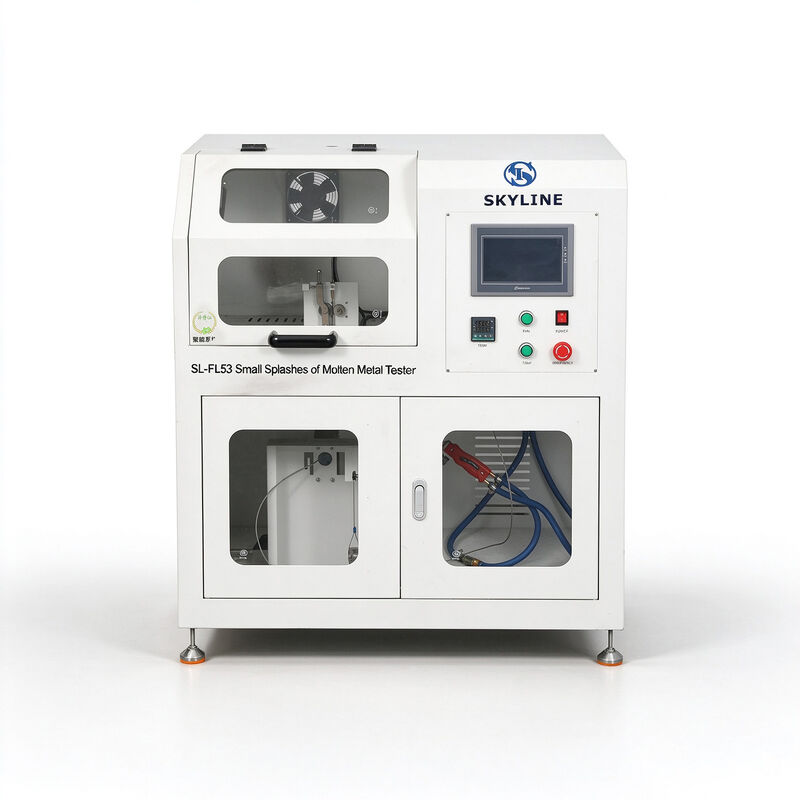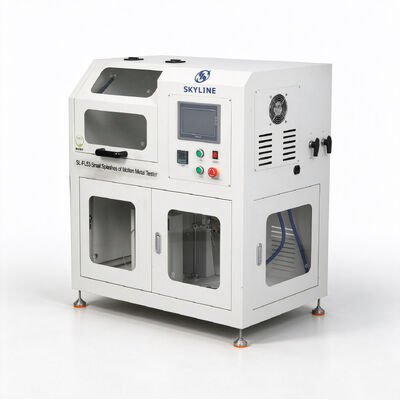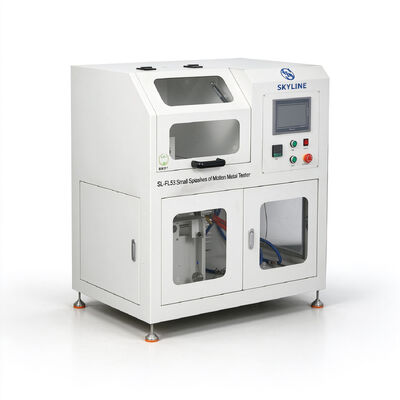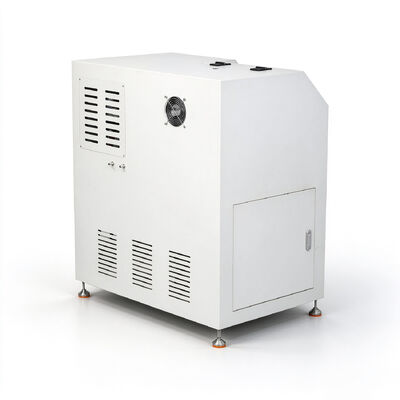
The SL-FL53 Molten Metal Splashes Impact Tester projects molten metal droplets onto a vertically oriented test specimen and measures the number of drops required to produce a 40 K temperature rise in a sensor positioned behind the specimen. This method delivers an objective, repeatable assessment of a material's resistance to molten metal splash.
The SL-FL53 is designed to meet the following national and international standards for molten metal splash testing:
| Dimensions | 700 mm (W) × 850 mm (H) × 500 mm (D) |
|---|---|
| Weight | 42 kg |
| Electrical Requirements | 220 V, 50 Hz, 5 A |
| Environmental Requirements | Temperature (20 ± 2) °C, Humidity (65 ± 5) % RH |
| Gas Requirements | Oxygen and acetylene supply |
It meets AQ 6103, ISO 9150:1988, CSN EN 348:1992, GB 8965.2:2009, and GB/T 17599:1998 — covering Chinese, European, and international requirements in a single unit.
Any pliable fabric or composite material used in protective clothing, including welding apparel, foundry suits, and thermal barrier textiles.
It counts how many molten metal droplets (0.50 ± 0.05 g each, at 20 drops/min) are required to raise the sensor behind the fabric by 40 K, providing a clear and objective protection rating.
Very. The stepping motor delivers a precise 10 g/min feed rate, needle valves provide fine gas control, and the 175 g counterweight ensures consistent specimen tension — resulting in reliable, repeatable data every time.
Yes. Set the motor speed on the LCD screen, light the torch, and start the test. Temperature rise is logged automatically, with no complicated programming required.
220 V, 50 Hz, 5 A power; oxygen and acetylene gas supply; installation at 20 ± 2 °C and 65 ± 5 % RH. The compact 700 × 850 × 500 mm footprint and 42 kg weight suit most laboratories.
Foundries, metal processing facilities, protective clothing manufacturers, industrial safety laboratories, and R&D facilities.
Molten metal droplets are projected onto a vertically oriented specimen, and a sensor behind it measures the number of drops needed to raise the temperature by 40 K.
Fire testing encompasses reaction and resistance to fire testing of materials and structures, performance testing of fire suppression components and systems (such as extinguishers and sprinklers), detection and alarm systems and cables, and smoke and heat ventilation systems.