| Brand Name: | SKYLINE |
| Model Number: | SL-T23 |
| MOQ: | 1 |
| Price: | negoitable |
| Payment Terms: | T/T |
| Supply Ability: | 1 unit/Month |
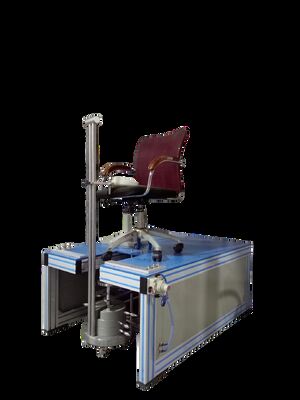
This specialized testing equipment is designed to evaluate the front and rear stability of office chairs, ensuring they meet rigorous safety and performance standards.
ANSI/BIFMA X5.1-2017 Sections 11 & 12
| Parameter | Specification |
|---|---|
| Cylinder Stock | 250mm |
| Horizontal Force | 20N |
| Engine Power | Approximately 20W |
| Loading Position | 60mm away from the front center of the seat surface |
| Seat Compression Plate | Diameter 200mm, arc surface 300mm |
| Machine Dimensions | 1350mm × 1000mm × 1850mm (L × W × H) |
| Test Area | 780mm × 740mm (L × W) |
Frequently Asked Questions
Q1: What is this equipment used for?
This tester evaluates the front and rear stability of office chairs to determine if they tip over under specific load conditions, helping manufacturers meet ANSI/BIFMA X5.1 safety requirements.
Q2: How does the test work?
A weighted load is placed on the seat at a defined position, and a horizontal force is applied. The machine measures whether the chair remains stable or tips forward/rearward under these conditions.
Q3: What standards does it comply with?
It is designed specifically for ANSI/BIFMA X5.1-2017 Sections 11 (Forward Stability) and 12 (Rear Stability).
Q4: What weight loads are required for testing?
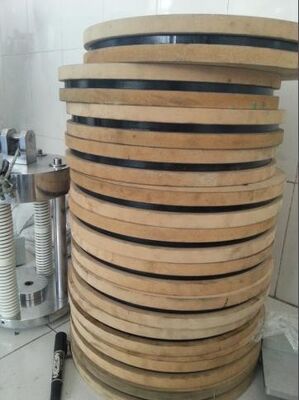
Forward stability requires 60 kg (European) or 61 kg (American); rear stability requires 130 kg. The tester accommodates all these configurations.
Q5: What chair types can be tested?
Most standard office chair designs—including task chairs, executive chairs, and ergonomic models—can be tested, provided they fit within the 780 mm × 740 mm test area.
Q6: What are the space requirements for installation?
The machine measures 1350 mm × 1000 mm × 1850 mm. Ensure adequate clearance around the unit for loading and observation.