logo
Products
Home / Products / Lab Testing Equipment /

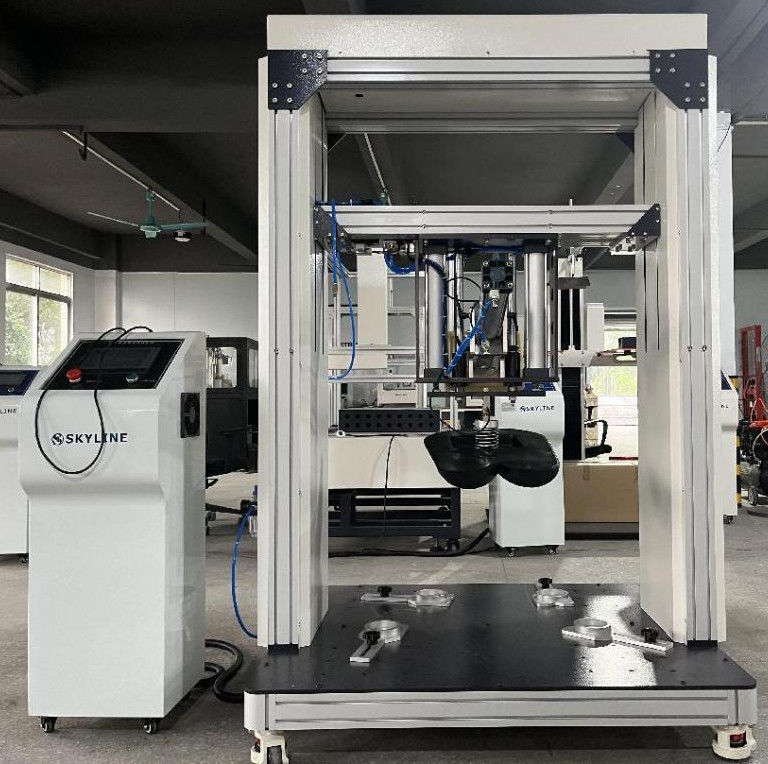
EN 1728 Chair Seat & Back Comprehensive Durability Tester

EN 1728 Chair Seat & Back Comprehensive Durability Tester

Brand Name: Skyline
Model Number: SL-T16
MOQ: 1
Price: Negotiable
Payment Terms: T/T, L/C, D/A, D/P, Western Union, , In Cash
Supply Ability: 30 unit / month
Detail Information
Place of Origin:
China
Certification:
CE, Rosh, Calibration
Force Actuator Height(Adjustable):
500-1200mm
Test Sample Height(Adjustable):
300~600mm
Control System:
PLC, Programmable Controller
Back Load:
5~100KG
Seat Load:
5~300KG
Air Power:
≥0.6MPa
Test Speed(Adjustable):
1~30 Time /min
Test Times(Adjustable):
1~999999times
Packaging Details:
plywood case
Supply Ability:
30 unit / month
Highlight:

Back Comprehensive Durability Tester

,

EN 1728 Chair Seat Tester

,

Comprehensive Durability Tester

Product Description

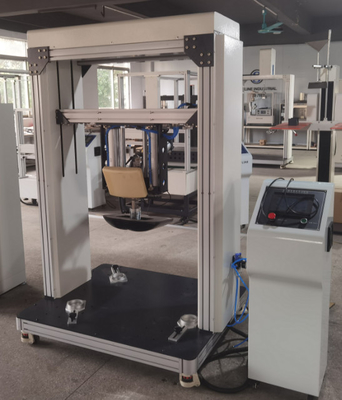
SL-T16 Seat & Back Comprehensive Durability Tester


Product Introduction

The machine is designed to test seating and back by specified load block with setting force and speed, to assess chair seating and back durability.Suitable for testing seat products, such as office chair, chair, stool, etc.


Test Standards

GB/T 10357.3-2013 4.3, 4.7, 4.8; QB/T 2280-2016 6.6.3, 6.6.8

EN 1728 6.4, 6.5, 6.17, 7.3, 7.9; ISO 7173-1989; BS EN 1335-3-2009 7.2.2, 7.3.1; BS EN 581-2-2009 B.2.1.1


Technical Parameters


Force Actuator Height(Adjustable) 500-1200mm
Test Sample Height(Adjustable) 300~600mm
Control system PLC, Programmable controller
Back load 5~100KG
Seat load 5~300KG
Air Power ≥0.6MPa
Test speed(Adjustable) 1~30 time /min
Test Times(Adjustable) 1~999999times


Features

1) Force actuator height is adjustable to suit different kinds of chair (500-1200 mm)

2) 6 digits cycle counter for test cycle setting

3) Force of the actuator is adjustable (Maximum force is 120 Kg)

4) A 200 Kg force load cell to check the force applied on to the tilting back rest a nd the PID function of the controller can automatically fine tune the pressure.

5) The force application angle is adjustable to suit the tilt mechanism angle of the chair. (30 to 90 degree)

6) Test speed adjustable from 10 ~ 20 cycles per minute.

7) Compressed air requirement: 6 bar

8) Power : 220 volts AC , power consumption = 200W

9) Design criteria: BIFMA.X 5.1-2011,section 5,6,15,16 and 10.


Applications


  • Durability testing of office chairs and work seating

  • Quality validation for furniture manufacturers

  • Compliance testing for seating product certification

  • Backrest fatigue and strength evaluation

  • Seat surface durability assessment

  • Research and development of new seating products

  • Supplier quality control and incoming inspection

  • Testing laboratory and third-party certification services

Frequently Asked Questions

Q: What is this equipment used for?
This tester evaluates the durability and structural strength of chairs, stools, and other seating by simulating repeated loading on the seat and backrest. It helps manufacturers ensure products withstand long-term use without failure.

Q: How does it work?
Pneumatic actuators apply controlled, repeatable forces to the seat and backrest at programmable speeds and cycle counts. The PLC controller manages the test sequence, while a load cell with PID feedback maintains precise force application.

Q: What standards does it comply with?
It supports EN 1728, ISO 7173, BS EN 1335-3, BS EN 581-2, GB/T 10357.3, QB/T 2280, and BIFMA X5.1. This makes it suitable for testing to both European and American seating standards.

Q: What types of chairs can be tested?
Office chairs, work seating, stools, and various other seating furniture. The adjustable actuator height (500–1200 mm) and sample height (300–600 mm) accommodate different chair sizes and configurations.

Q: What load ranges does it support?
Seat load: 5–300 kg; back load: 5–100 kg. The adjustable force range allows testing across light-duty to heavy-duty seating products.

Q: Can I adjust the test speed and cycle count?
Yes. Test speed is adjustable from 1 to 30 cycles per minute, and cycle count can be set from 1 to 999,999, providing full flexibility to match specific standard requirements or custom test protocols.

  •