logo
Products
Home / Products / Furniture Testing Equipment /

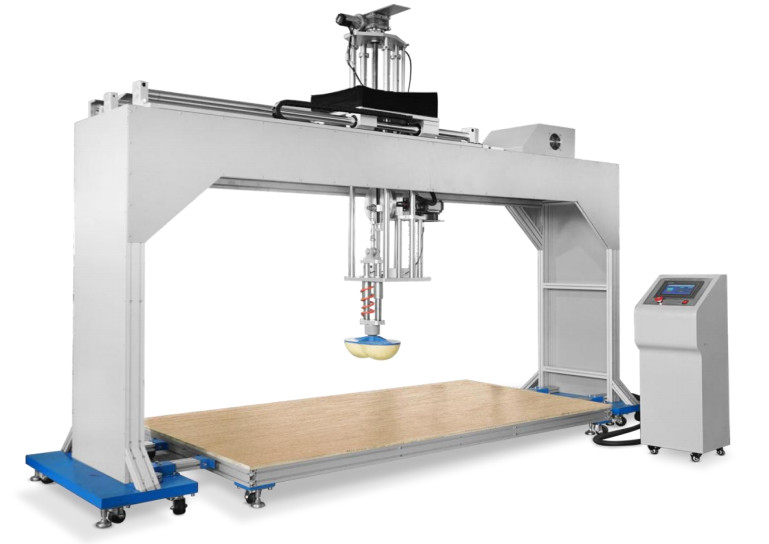
ASTM F1566 Cornell Mattress Durability Tester / Mattress Pounding Impact Test Equipment

ASTM F1566 Cornell Mattress Durability Tester / Mattress Pounding Impact Test Equipment

Brand Name: Skyline
Model Number: SL-T06
MOQ: 1
Payment Terms: L/C, T/T
Supply Ability: 20 sets per month
Detail Information
Place of Origin:
China
Certification:
CE, Rosh, Calibration
Display Accuracy:
0.001kgf
Deformation Precision:
0.001mm
Test Speed:
120-160 Times/min (adjustable)
Impact Height:
0-300mm Adjustable
Counter Range:
0-999999 Times
Max Mattress Size:
2200x2000mm(L*W)
Packaging Details:
plywood case
Supply Ability:
20 sets per month
Highlight:

mattress durability tester

,

cornell mattress durability tester

Product Description

Cornell Mattress Durability Tester / Mattress Pounding Impact Test Equipment

ASTM F1566 Cornell Mattress Durability Tester / Mattress Pounding Impact Test Equipment


Product Introduction


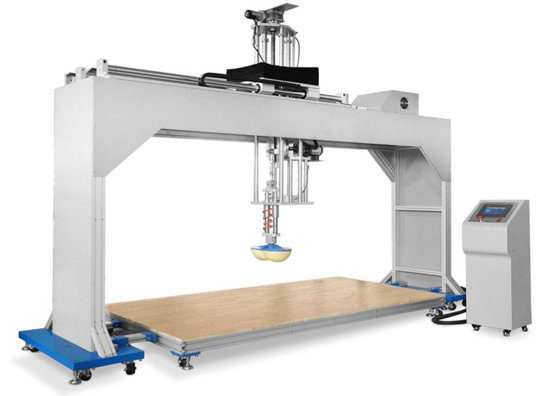
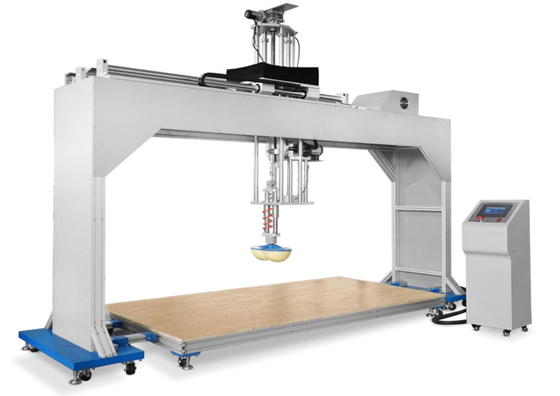
It applies to Innerspring, Box spring mattresses and Foam mattress. Testing for mattress on the long-term repeatability of the test load capacity, and the mattress compression deformation. With Cornell fatigue life test method, motor driven eccentric wheel, adjust the height of the impact of the impact block, then 120-160 times / min speed impact testing of mattresses, the impact of counter measures the number of times after the set automatically shutdown.


Test Standards


ASTM F1566


Technical Parameters


Display Accuracy

0.001kgf

Deformation precision

0.001mm

Test speed

120-160 times/min (adjustable)

Impact height

0-300mm adjustable

Counter range

0-999999 times

Max Mattress size

2200x2000mm(L*W)

Motor

2KW DC, 1/4HP, Panasonic servo motor

ASTM F1566 Test Requirements

1.Adjust the push rod stroke on mattress , maximum force = 1025N, minimum force = 22N

2. Pusher travel speed adjustable, about 100 weeks times per minute

3.Imposed the pressure on mattress by a transducer, pressure range to 300KG

Applications


  • Innerspring mattress durability testing

  • Box spring mattress fatigue evaluation

  • Foam mattress compression deformation measurement

  • Long-term repetitive load capacity assessment

  • Mattress firmness and firmness retention testing

  • Quality control for mattress manufacturers

  • Third-party testing laboratories and inspection agencies

  • Research and development of mattress materials and constructions

Frequently Asked Questions

Q: What types of mattresses can this equipment test?
A: This tester is designed for innerspring, box spring, and foam mattresses. It accommodates mattress sizes up to 2200×2000mm (L×W), making it suitable for most standard mattress dimensions.

Q: How does the Cornell mattress durability test work?
A: The motor-driven eccentric wheel system drives an impact block onto the mattress surface at speeds of 120–160 cycles per minute. The test simulates long-term repetitive loading to evaluate the mattress's durability and compression deformation characteristics.

Q: What standard does this equipment comply with?
A: The tester is designed to meet ASTM F1566, the recognized standard for evaluating innersprings, box springs, mattresses, and mattress sets.

Q: What parameters can be measured?
A: The system measures impact force (with transducer monitoring up to 300KG), compression deformation (precision 0.001mm), and impact count (up to 999,999 cycles). Display accuracy for force measurement is 0.001kgf.

Q: What industries use this mattress durability tester?
A: Mattress manufacturers, quality control laboratories, third-party testing facilities, research institutions, and furniture testing agencies commonly use this equipment for product development and compliance verification.

Q: Is the impact height adjustable?
A: Yes, the impact height is adjustable from 0–300mm, allowing you to customize test parameters based on specific mattress types and testing requirements.

Q: Can the test speed be adjusted?
A: Yes, the test speed is adjustable within the range of 120–160 times per minute, providing flexibility for different testing protocols.