logo
Products
Home / Products / Fire Testing Equipment /

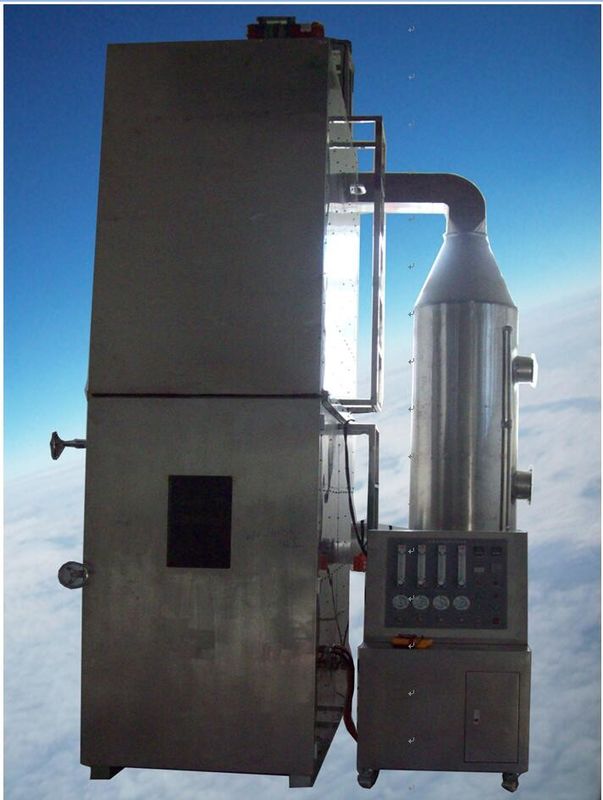
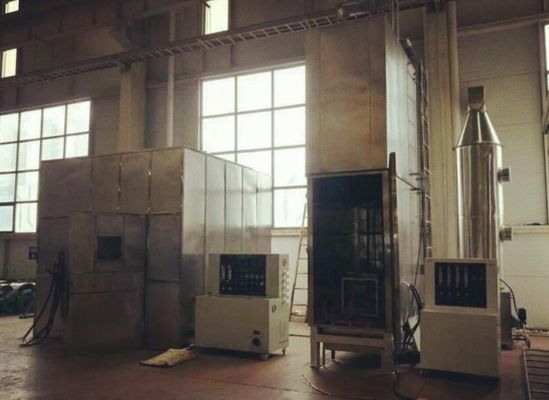
Fire Testing Equipment Bunched Wires Vertical Flame Tester with venturi air -gas mixer

Fire Testing Equipment Bunched Wires Vertical Flame Tester with venturi air -gas mixer

Brand Name: SKYLINE
Model Number: SL-FL67
MOQ: 1 unit
Price: negotiated
Payment Terms: T/T, L/C, Western Union, MoneyGram
Supply Ability: 1 unit/ month
Detail Information
Place of Origin:
CHINA
Certification:
CE
Standards:
IEC60332-3-10:2000/IEC 60332-3-21~25:2000
Dimension:
1,000±100(W) X 2,000±100(D) X 4,000±100(H) Mm.
Burner:
20.5±0.5kW
​Wide Stainless Steel Ladder Dimensions:
500(W) ×3, 500(H) Mm.
​Standard Stainless Steel Ladder Dimensions:
800(W) ×3, 500(H).
Packaging Details:
plywood case
Supply Ability:
1 unit/ month
Highlight:

flammability test apparatus

,

flammability testing labs

Product Description


SL-FL67 Wire and Cable Heat Release Test Device


I. Application

Scope of application:

Applicable to the combustion performance test of cables and fiber optic cables used in construction projects.

The test can obtain the following characteristics of cables or fiber optic cables under specific burning conditions:

---Flame spread (FS);

--Heat release rate (HRR);

--Total heat release (THR);

--Smoke production rate (SPR);

--- Total smoke production (TSP);

--- Combustion growth rate index (FIGRA);

--- Burning droplets/particles


II. Conform to the standards:

2.1 Conforms to the Chinese standard GB31247-2014 "cable and fiber optic cable combustion performance classification

2.2 Conforms to the EU standard EN 50575:2014 "Power, control box communication cables during building construction to comply with fire resistance requirements".

2.3 Conforms to the Chinese standard GB/T31248-2014 "Test Methods for Flame Spreading Heat Release and Smoke Producing Characteristics of Cables and Optical Fiber Cables under Fire Conditions";

2.4 Conforms to the EU standard EN50399:2022 "General test for cables under fire conditions, Measurement of heat release and smoke production in flame spread test - Test apparatus, procedure and results".

2.5 Conforms to China's Ministry of Public Security standard GA/T 716-2007 "Test methods for flame propagation and heat release and smoke production characteristics of cables and optical fiber cables under fire conditions".


III. Main Features:

3.1 Our company is not only designed in strict accordance with the GB/T31248-2014 standard, in line with the GB31247-2014 wire and fiber optic cable combustion performance classification in addition to the design of the EU standard EN50399: 2022, to meet the EN50575-2014B standard of the European Union to implement the CPR certification. The CPR certification of the EU is mandatory worldwide in 2017.

3.2 Analyzer: the oxygen analyzer adopts Siemens brand, the whole machine is originally imported, carbon monoxide and carbon dioxide use German and Swiss sensors and modules respectively;

3.3 Adopting LabeView, a special development software for instrumentation, and data acquisition control card; the test data curve can be viewed in real time during the control test, and automatic data acquisition and processing, data saving and output of measurement results can be realized.

3.4 Status checking interface: the working status of each sensor component of the instrument can be obtained at a glance; the working values of each sensor can be recorded, including differential pressure sensor, chimney temperature, oxygen analyzer, carbon dioxide analyzer, carbon monoxide analyzer; the report template is in EXCELL format, which can display graphic and numerical modes.

3.5 Operating system: powerful background computing database, can real-time collection and processing of data, to achieve the real fool. Real-time collection and recording of oxygen consumption of combustion, carbon dioxide generation of combustion, light transmission rate of smoke in the exhaust pipe, heat release rate (HRR), the total amount of heat release (THR), combustion growth rate index (FIGRA), smoke production rate (SPR) and other technical parameters.


3.6 Calibration Modes: Individual sensor calibration modes can be set to include single or dual point calibration for oxygen analyzers, carbon dioxide analyzers, carbon monoxide analyzers, differential pressure sensors, smoke density measurement systems, and mass flow control for optimum linearity;

3.7 Calibration Program: A separate routine calibration program is provided. The program contains: drift of HRR, oxygen content and transmittance during the 5 min prior to ignition; average value of HRR during the last 5 min of the combustion phase; initial value of the respective average values of oxygen content, transmittance and HRR during the 1st min of the 5 min baseline calibration giving process prior to ignition; and the final value of the respective average values of oxygen content, transmittance and HRR during the last 1 min of the calibration test process; The difference between the initial and final values of oxygen content, HRR and light transmission rate.

3.8 The combustion chamber is of square-pass steel structure with stainless steel inner wall, black corrosion-resistant paint, thermal insulation wool with heat transfer coefficient of 0.7W-m-2-K-1 in the middle and stainless steel outer wall. Equipped with a steel ladder to the top of the combustion chamber, and the installation of square pass guards at the top of the chamber, to determine the convenience of the roof to maintain equipment and improve safety.

3.9 Installation of the specimen: using electric hoist lifting;

3.10 safety protection: when the specimen is found to be completely non-flame retardant, installed with mandatory fire extinguishing device;

IV the main parameters:

4.1 Composition of the instrument: combustion chamber, smoke collection hood, air supply system, standard ladder, ignition source, smoke exhaust pipe section, sampling and measuring pipe section, smoke density optical test system, gas analyzer, data acquisition and software processing system, computer control system, combustion gas control system and smoke exhaust system and other components.

4.2 Combustion chamber:

4.2.1 Test box: is a wide (1000 ± 50) mm, deep (2000 ± 50) mm and high (4000 ± 50) mm self-supporting box. The top of the test box installed steel ladder side of the smoke outlet, dimensions of the width of 300 ± 30mm, length of 1000 ± 100mm. test box of the back wall and both sides of the heat transfer coefficient of about 0.7W.m-2.K-1 thermal insulation materials.

4.2.2 Material of the test chamber: square through steel structure, the inner wall is 1.5mm thick stainless steel, brush black corrosion-resistant paint, 65mm thick heat transfer coefficient of 0.7W-m-2-K-1 thermal insulation cotton wrapped around the steel plate, and the outer wall is 1.5mm steel plate brushed with the color of the paint requested by the customer. Equipped with a steel ladder to the top of the combustion chamber, and the installation of a square pass barrier at the top of the chamber, to determine the convenience of the roof maintenance equipment and improve safety.

5.1 Requirements;

4.2.3 The test chamber is fitted with a large door on the front side, and the door is equipped with a tempered glass window, which enables the indoor test situation to be observed at any time. During the test, the door is closed and sealed to prevent the harmful substances generated by combustion from polluting the indoor air.

4.3 Air supply system: meet the requirements of EN50399 2022

4.3.1 Dimensions of air inlet at the bottom of the test chamber: (800±20) × (400±10) (mm). There is an air box installed at the air inlet, and air is introduced directly into the combustion chamber through the air box installed under the air inlet, and the size of the air box is the same as the size of the air inlet. The depth of the air box is 150mm±10mm, and air is blown into the air box by a fan through a rectangular straight pipe, which is 300mm±10mm wide, 80mm±5mm high, and 800mm long, and whose spacing between the bottom surface and the bottom surface of the air box is 5~10mm; the pipe is laid parallel to the bottom surface, and at the same time is laid along the centerline of the blowtorch, and the air is introduced into it through the middle of the longest side of the air box . A grille is installed at the air inlet to make the air


Figure 3, Air Supply System

The air flow is even and consistent. The grille is made of 2mm thick steel plate with holes drilled with a nominal diameter of 5mm and a center distance of 8mm.

4.3.2 Air introduction fan: it is a variable frequency speed fan, and the air supply is automatically controlled by computer. Measure the air flow in the cross-section of the circular pipe before the rectangular pipe before the test, and set the air flow to 8000L/min ± 400L/min, and maintain a stable air flow during the test, with the deviation within 10% of the set value.

4.3.3 A digital air anemometer is installed in the cross-section of the circular pipe before the rectangular pipe, which can visually read and can control the gas flow rate of the air passing through the box.

4.4 Types of steel ladders: see Figure 4

4.4.1 Commonly used steel ladder: width (500 ± 5), height (3500 ± 10) mm; material USU304 stainless steel.

4.4.2 Special steel ladder: add non-combustible calcium silicate backing plate after the commonly used steel ladder, and the installation requirements of the specimen are the same as those of the commonly used steel ladder. Fix the non-combustible calcium silicate backing plate along the standard steel ladder on the transverse gear, with density of 870kg/m3±50kg/m3, thickness of 11mm±2mm, width of 415mm±15mm, length of 3500mm±10mm, and the installation method conforms to the section 6.5.1 of GB/T31248-2014 and the test requirements of GB/T18380.31-2008. Requirements;

4.4.3 The upper end of the box is equipped with lifting steel ladder with electric hoist and bracket and other components; to facilitate the specimen on the ground mounted on the steel ladder, and then lifting the steel ladder and the specimen mounted on the fixtures; operation, mounting samples convenient.

4.4.4 The steel ladder meets the requirements of EN50399 2022

(burner with the venturi air -gas mixer and distance between burner and mixer should be not Less than 150mm and inner diameter at least 20mm)

4.5 Smoke hood:

4.5.1 The smoking hood is installed directly above the smoke outlet of the combustion chamber, 200mm~400mm above the smoke outlet of the combustion chamber, with the longest side parallel to the longest side of the smoke outlet, and the minimum size of the bottom surface is 1500mm x 1000mm.

4.5.2 Air and flue gas mixing baffle: there is a smoke collection room connected with the smoke exhaust pipe above the smoking hood, and in order to make the air in the smoking hood mix with the flue gas fully, there is an air and flue gas mixing baffle installed at the smoke inlet.

4.5.3 All gases generated during the test shall be discharged through the smoke exhaust pipe without any flame penetration or smoke leakage during the whole process. Under the conditions of atmospheric pressure and 25°C, the smoke exhaust capacity of the system is more than 1m3/s. The design of the ventilation system is not based on the natural ventilation conditions, and in order to discharge a large amount of smoke generated in the combustion process of the cables, the smoke exhaust capacity of the system is 1.5m3/s or more.

4.5.4 Conforms to the standard requirements of EN50399 2022

4.6 Smoke exhaust pipe: Figure 5

4.6.1 The smoke exhaust pipe is connected to the smoking hood. The inner diameter of the pipe is 300mm D. In order to form a uniform flow distribution at the measuring point, the length of the straight section of the pipe is 3600mm.

4.6.2 The material of the smoke exhaust pipe: double-layer pipe with 1.2mm thick USU304 stainless steel inside, asbestos layer in the middle and 1.2mm thick white iron outside.

4.6.3 Meanwhile, in order to accurately measure the flow rate, our company, in accordance with the provisions of the European Union standard EN14390, forms a uniform flow surface before and after the test section by means of a deflector sheet.

4.6.4 Volume flow rate in the exhaust pipe: the volume flow rate in the exhaust pipe is set to 1.0m3/s±0.05m3/s, and the volume flow rate is kept in the range of 0.7m3/s~1.2m3/s during the test.

4.7 Bidirectional probe .

4.7.1 Installation position: the two-way probe measures the volume flow rate in the exhaust pipe, the probe is installed in the centerline position of the pipe with a length of 2400mm from the beginning of the exhaust pipe, and the length of the connecting pipe to the end of the exhaust pipe is 1200mm. the probe is a cylinder with a length of 32mm and an external diameter of 16mm, made of stainless steel. The gas chamber is divided into two identical chambers and the pressure difference between the two chambers is measured by a pressure sensor. It meets the requirements of 4.5.1 in GB/T 31248-2014;

4.7.2 Differential pressure sensor: a high-precision differential pressure transmitter is used to measure the pipeline differential pressure. For high-precision bi-directional probe, range (0 ~ 200) Pa, accuracy of ± 1 Pa, pressure sensor 90% output response time of up to 1s;

4.7.3 thermocouple: the use of composite GB/T16839.1-1997 provisions of the K-type armored thermocouple to measure the temperature of the gas in the region near the probe. Thermocouple wire diameter of 1.5mm.

4.8 Sampling probe: the sampling probe is installed in the exhaust pipe where the flue gas is fully mixed. The sampling probe is cylindrical to minimize interference with the surrounding flue gas flow. The sampling position of the flue gas is set along the entire diameter of the exhaust pipe. To avoid blocking of the sampling probe by soot, the direction of the holes on the sampling probe is adjusted downward. The sampling probe is connected to the oxygen and carbon dioxide gas analyzer through a suitable sampling tube. It meets the requirements of section 4.5.2 of GB/T 31248-2014;


Fire Testing Equipment Bunched Wires Vertical Flame Tester with venturi air -gas mixer 0


Figure 5 Smoke evacuation ducts, measuring sections, sampling sections

4.9 Sampling system:

4.9.1 Composition of sampling system: it consists of sampling tube, soot filter, cold trap, drying column, pump and waste liquid regulator, which can ensure the effective collection of flue gas samples and absorb the exhaust gas.

4.9.2 Sampling tube is made of PTEE corrosion-resistant material.

4.9.3 Soot Filter: The gas produced by combustion is filtered by the filter in multiple stages to reach the particle concentration level required by the analyzing instrument. The multi-stage filter adopts Japanese Fuji brand. The filter head is composed of solid PTFE and the interior is 0.5um PTFE filter material.

4.9.4 Cold trap: the extracted flue gas condenses through low temperature to produce water vapor, and then the water vapor is separated from the soot; the cold trap adopts the compressor refrigeration, with a cooling capacity of 320KJh, dew-point stability of 0.1 degrees, and a static change of dew-point of 0.1 K. The system has the ability to exclude excess water vapor;

4.9.5 Drying column: the separated flue gas is then dried by a two-stage drying column;

4.9.6 Sampling pump: the German KNF diaphragm pump, the pump's discharge capacity of 10L/min ~ 50L/min, the pump generates a differential pressure greater than 10kpa. The end of sampling pipe is connected with oxygen and carbon dioxide gas analyzer.

4.10 fan: install a smoke exhaust fan at the end of the smoke exhaust pipe, at a temperature of 25°C and atmospheric pressure conditions, the fan's exhaust capacity is greater than 1.5m3/s. The fan power is 7.5kw.

4.11 Smoke density measurement equipment: two different measurement techniques are used for smoke density measurement. Comply with GB/T31248-2014 section 4.7 standard requirements.

4.11.1 Equipment installation location: installed in the smoke exhaust pipe where the airflow is evenly mixed;

4.11.2 The white light system adopts flexible joints to install the white light type light attenuation system with the measuring pipe of the smoke exhaust duct, and includes the following devices

4.11.2.1 incandescent lamps: used at a color temperature of 2900K ± 100K; for 6V,10W incandescent lamps, plus a DC power supply unit to provide stable DC power and current fluctuations within 0.5% (including temperature, short-term and long-term stability);

4.11.2.2 lens system: used to focus light into a parallel beam with a diameter of at least 20mm. The light-emitting aperture of the photocell shall be located at the focal point of the lens in front of it, and its diameter (d) shall depend on the focal length (f) of the lens so that d/f is less than 0.04.

4.11.2.3 detector: Japan Hamamatsu optical measuring element, measuring range of 400-750nm visible light range, transmittance accuracy of 0.01%, optical density range of 0-4, smoke density accuracy of ± 1%, the spectral distribution of its responsivity and the CIE's V (λ) function (light curve) of the overlap of the accuracy of ± 5%; in the range of 1% ~ 100% of the detector output. Its output value shall be linear within 3% of the measured transmittance or within 1% of the absolute transmittance;

4.11.2.4 light attenuation system of 90% response time should not exceed 3s, should be introduced to the side tube air to keep the optics in line with the light attenuation drift requirements of the cleanliness, compressed air can be used instead of self-absorption system. The calibration of the optical attenuation system should meet the requirements of GB/T 31248-2014 in Appendix F.4.

4.11.2.5 The specific parameters are as follows:

4.11.2.5.1 Light source: imported German Philips incandescent lamps

4.11.2.5.2 Nominal power: 10W

4.11.2.5.3 Nominal voltage: 6V

4.11.2.5.4 Accuracy: ± 0.01V

4.11.2.5.7 Acceptor: Japan Hamamatsu silicon photocell, amplified by the board signal, through the I / O board input to the computer, the spectral response and the International Commissioners of Illumination (CIE) photometer to match.

4.11.3 Laser system: laser photometer should use helium-neon laser with an output power of 0.5 mW to 2.0 mW. Measuring tube should be introduced into the air, the optics to maintain compliance with the light attenuation drift requirements of cleanliness (F.4.2), can be compressed air instead of self-absorbed air.

4.12 Flue gas analyzing equipment:

4.12.1 Oxygen analyzer: Germany SIEMENS machine imported, paramagnetic.

4.12.1.1 Measuring range: (0-25)%.

4.12.1.2 Signal output: 4-20mA;

4.12.1.3 Resolution 100×10-6

4.12.1.4 Relative humidity: <90% (no condensation);

4.12.1.5 Linearity deviation: <±0.1% O2;

4.12.1.6 Zero drift: 0.5%/month;

4.12.1.7 Range drift: 0.5%/month.

4.12.1.8 Internal signal processing time less than 1S;

4.12.1.9 Response time: T90 <5 seconds

4.12.1.10 Repeatability: <±0.02% O2;

4.12.1.11 local display: LCD liquid crystal display (with backlight)

4.12.1.12 Analog output: 420mA 750Ω

4.12.1.13 Ambient temperature: 5 ~ +45 ; power supply: 220VAC ± 10%, 50 ~ 60Hz.

4.12.1.14 30min analyzer noise drift are not more than 100 × 10-6; data acquisition output resolution better than 100 × 10-6


Figure 6 Siemens original imported analyzer


4.12.2 Carbon dioxide (CO2) measuring instruments:

4.12.2.1 Measurement by infrared (IR), the sensor and board are imported from MBE, Germany ;

4.12.2.2 Measuring range: 0-10%;

4.12.2.3 Repeatability: <± 1%

4.12.2.4 Zero drift: ≤ 0.5% / month

4.12.2.5 Range drift: ≤ 0.5%/month

4.12.2.6 Linearity deviation: ±1%

4.12.2.7 Response time: T90<3.5 sec.

4.12.2.8 Output resolution of the data acquisition system is better than 100×10-6

4.12.2.9 Analog output: 4 ~ 20mA 750Ω

4.12.2.10 Ambient temperature: 5℃~+45℃.

4.12.2.11 Power supply: 220VAC ± 10%, 50 ~ 60Hz 5000W

4.12.2.12 30min analyzer noise drift are not more than 100 × 10-6

4.12.3 Pre-treatment of analyzer: Before analyzing the oxygen and carbon dioxide content of the flue gas generated during the test, pre-treatment is carried out to ensure that the flue gas is dry and reaches the particle concentration level required by the analyzer. The pre-treatment consists of condensation, filter, German KNF sampling pump, flow meter and piping.

4.13 Calibration of the entire test instrument:

4.13.1. flow distribution measurement: flow distribution factor Kc measurement, equipped with two-way probe measurement;

4.13.2 Sampling lag time measurement; computer software was used to make corrections to all data;

4.13.3 Commissioning calibration:

4.13.3.1 Kt factor calibration for routine testing use: after calibration using propane and methanol fuels, the final calibration factor Kt was calculated; i.e., the Kc factor of the flow rate distribution was subtracted from the final correction factor for propane and methanol fuels;

4.13.3.2 The gas analyzer is calibrated using standard gases: one bottle of nitrogen and one bottle of carbon dioxide gas;

4.13.3.3 HRR calibration: calibration using gas torch and liquid combustion; calibration using different heat release rate classes (20kW to 200kW).

4.13.3.4 Calibration of the stability of the flue gas measurement system: By recording the absolute value of the difference between the output signal readings of the 0min and 30min optical receivers as drift. Noise is determined by calculating the mean square heel (r.m.s.) deviation of this linear trend line; output stability determination: noise and drift less than 0.5% of initial value;

4.13.3.5 Calibration of white light system measurement accuracy: 25%, 50% and 75% calibration using standard filters;

4.13.3.6 Calibration of the flue gas measurement system: record before and after data when using heptane combustion. Judgment criteria: the deviation of the transmittance measured at the end of the calibration test from that measured before the test is within ±1%; the ratio of the TSP (total smoke production) measured in the calibration test to the mass loss of heptane is within the range of (110±25) m2/1000g.

4.13.4 Routine calibration: equipped with independent routine calibration program. The routine calibration program is designed in accordance with 5.5 of GB/T31248-2014.4.13.4.1 Calibration program:

A. Drift of HRR, oxygen content and transmittance in 5min before ignition;

B, Average value of HRR for the last 5 min of the combustion phase;

C, the respective average values of oxygen content, transmittance and HRR within the 1stmin of the 5min before ignition baseline calibration giving process as initial values;

D, the respective average values of oxygen content, transmittance and HRR during the last 1min of the calibration test process are the final values;

E. The difference between the initial and final values of oxygen content, HRR and light transmission rate.

4.13.4.2 Calibration results meet the following requirements:

A. The deviation of the average value of HRR within the last 5 min of the combustion phase from the set value is within ±5% of the set value of 20.5kw or 30kw;

B. The difference between the initial and final values of oxygen content is less than 0.02%;

C, the difference between the initial and final values of light transmission rate ≤ 1% of the value of light transmission rate;

D. The difference between the initial and final values of HRR is less than 2kw;

E. The drift value of light transmission rate in 5min before ignition is less than 1%;

F, the drift of oxygen content in 5min before ignition is less than 0.02%;

G. The drift value of HRR within 5min before ignition is less than 2kw.

4.14. Ignition source:

4.14.1 Torch: venturi air-propane hybrid torch, length 341mm (see below for details)


Figure 7 Ignition source

A. Each blowtorch is drilled with 242 ¢1.32mm fire-breathing holes

B. Combustion gas: 95% pure propane. (Customers to provide their own)

C. Combustion gas: compressed air. (Air pressure should reach more than 10Mba) Customers to provide)

D. Air flow: (600~6000)mg/min adjustable.

C, propane flow: (200~2000±0.5)mg/min adjustable.

D, 20.5kw blowtorch: the mass flow of propane is 442mg/s±10mg/s, the mass flow of air is 1550mg/s±95mg/s;

E. 30kw blowtorch: the mass flow rate of propane is 647mg/s±15mg/s and the mass flow rate of air is 2300mg/s±140mg/s;

4.14.2 Mass flow: the use of Sino-Korean joint venture seven-star Huachuang mass flow meter, range: 0 ~ 2.5g / s, which is in the range (0.6 ~ 2.5) g / s; accuracy of 1%; digital display, with 4 ~ 20mA output, through the collection card can be directly controlled by the computer, fast response time, high control accuracy.

4.15 Data acquisition accuracy and acquisition time:

4.15.1 O2 and CO2, accuracy of 100 × 10-6 (0.01%);

4.15.2 Temperature measurement: 0-400; accuracy ±0.5;

4.15.3 Measurement of indoor air relative humidity device: 20% to 80%, accuracy 5%;

4.15.4 Time recording system accuracy: 0.1S;

4.15.5 Testing time: 199m/s can be set;

4.15.8 Accuracy of other parameters: 0.1% of full-scale output value;

4.15.9 Acquisition time: the acquisition system automatically collects and stores every 3s, including the following parameters: time, mass flow rate of propane gas through the burner, differential pressure of the bidirectional probe, relative optical density, O2 concentration, CO2 concentration, volumetric flow rate of the gas in the exhaust pipe, transmittance, ambient temperature of the bottom of the trolley at the air conduction inlet. When calculating the heat release rate of the material, take the average value every 30s; when calculating the smoke production rate of the material, take the average value every 60s. According to the above measurement data, calculate the heat release rate of the material, the total amount of heat release, combustion growth rate index, smoke production rate and smoke production index.

4.15.10 Acquisition board: Advantech data acquisition board from Taiwan is used.

4.16 Computer control system:

4.16.1 Adopt instrument and equipment-specific development software LabeView and data acquisition control card; control the test process can be viewed in real time test data curves, can realize automatic data acquisition and processing, data preservation and output measurement results

4.16.2 Calibration program: equipped with an independent routine calibration program. The program contains: drift of HRR, oxygen content and transmittance in 5min before ignition; average value of HRR in the last 5min of the combustion stage; the respective average values of oxygen content, transmittance and HRR in the first minute of the baseline calibration process in the 5min before ignition as the initial value; and the respective average values of oxygen content, transmittance and HRR in the last 1min of the calibration test process as the final value; The difference between the initial and final values of oxygen content, HRR and light transmission rate.

4.16.3 The test record (3 sec/time) is stored by number and can be queried at any time; the test report printing effect can be viewed in real time, which can be accomplished by simply clicking the buttons of Start, Calculate and Save, etc., making it easy to use. Store the following relevant values:

Time (s), mass flow rate of propane gas through the burner (mg/s), differential pressure of the bi-directional probe (Pa), relative optical density, O2 concentration (V Oxygen/V Air)%, CO2 concentration (V Carbon Dioxide/V Air)%, and ambient temperature at the bottom air conductor population (K);


4.16.4 At the same time to increase the data retrieval function, you can load the previous experimental data for new calculations and form a report.

5, the performance of the whole machine:

5.1 The whole machine using space: 11 meters long, 7 meters wide, 5.5 meters high or more (including the control room, sample making area, gas room and other space)

5.2 Control room construction: 3 meters long, 3 meters wide, 2.8 meters high (by the demand side);

5.3 Power of the whole machine: AC380V, three-phase five-wire system; power: >15kw;

5.4 The equipment has the following safety protection devices: power overload, short-circuit protection, control circuit overload protection.