| Brand Name: | SKYLINE |
| Model Number: | SL-FL56 |
| MOQ: | 1 unit |
| Price: | negotiated |
| Payment Terms: | T/T, Western Union,paypal |
| Supply Ability: | 3pcs/month |
Protective Clothing Protection Against Heat And Fire
Performance characteristics
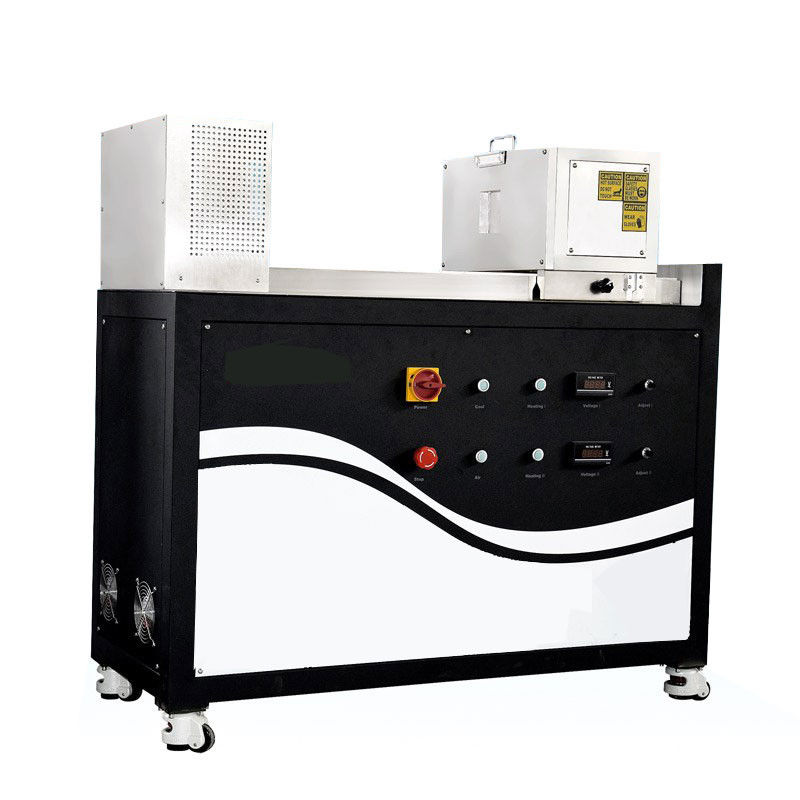
1. The convective heat resistance test device is composed of radiation device, sample bracket, data acquisition and software system.
2. The thermal radiation device is composed of six Glowbar heat radiation tubes with working temperature not less than 1100 degrees.
3. Sample clamping device is cooled and protected by circulating water cooling device.
4. Copper plate calorimeter made of oxygen-free superconducting copper is used to measure the heat radiation flux.
5. The sample holder can move horizontally, and the heat radiation flux can be determined by different positions.
6. Equipped with weighting device, it can be used to apply 2N standard gravity to the sample.
7. Data acquisition system can record heat radiation flux, temperature, time and other parameters.
8. Equipped with computer and printer device, it can output data and print test report.
Application: Safety Protection
Standard: AQ 6103/BS EN 366:1993/DIN EN 366:1993/ISO 6942:2002
Size: 1300mm (L) X 500mm (W) X 1200mm (H)
Weight: 160KG
Installation Requirements: Electricity Requirements: 220V, 70A
Ambient temperature: 10 C to 35 C
Gas requirements: air compressor air source
Applications
- Protective Clothing Manufacturers – Quality control and certification testing of heat-resistant garments
- Safety Equipment Testing Laboratories – Independent verification of thermal protection performance
- Industrial Safety Compliance – Testing protective gear for workers in high-heat environments
- Research Institutions – Material development and comparative analysis of thermal barrier fabrics
- Firefighting Equipment Suppliers – Certification of turnout gear and proximity suits
- Military and Defense – Testing of protective uniforms for personnel exposed to thermal hazards
- Welding and Foundry Industries – Evaluation of protective aprons, sleeves, and suits
- Petrochemical and Refinery – Assessment of PPE for workers in radiant heat exposure zones
Frequently Asked Questions
Q1: What is this equipment used for?
A1: It evaluates the thermal radiation protection performance of materials used in heat- and fire-resistant protective clothing, gloves, and footwear, helping manufacturers certify their products meet safety standards.
Q2: How does the tester work?
A2: The sample is exposed to radiant heat from six Glowbar tubes (≥1100°C). A copper calorimeter measures heat flux, and the system records the time needed for the sample's back temperature to rise by 12°C or 24°C to calculate the Radiation Heat Transfer Index.
Q3: What standards does it comply with?
A3: The tester meets ISO 6942:2002, BS EN 366:1993, DIN EN 366:1993, and AQ 6103.
Q4: What materials can be tested?
A4: Single- and multi-layer textiles and other materials intended for heat-protective clothing, including fabrics used in firefighting gear, industrial PPE, and welding protection suits.
Q5: What are the installation requirements?
A5: The unit requires a 220V, 70A power supply, ambient temperature of 10–35°C, and an air compressor air source. Dimensions are 1300mm × 500mm × 1200mm, weighing 160KG.
Q6: What industries use this equipment?
A6: Protective clothing manufacturers, safety testing labs, firefighting equipment suppliers, military procurement, research institutions, and industrial sectors like petrochemical, welding, and foundry.
Q7: What is the difference between Method A and Method B?
A7: Method A visually evaluates material appearance changes after radiant heat exposure. Method B quantifies thermal protection by measuring the time to raise back temperature by 12°C or 24°C, calculating the RHTI.
Q8: Can the system generate test reports?
A8: Yes, the equipment includes a computer and printer for data acquisition, processing, and printing professional test reports.